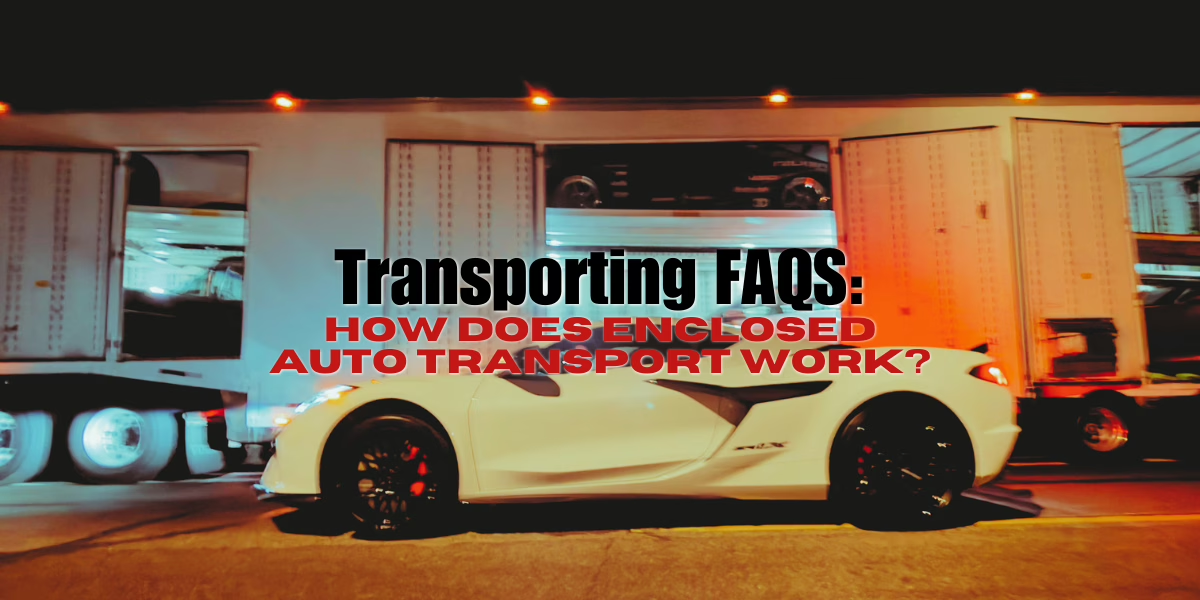
How Does Enclosed Auto Transport Work for Luxury & Exotic Vehicles?
When transporting a high-value vehicle—whether it’s a Ferrari SF90, a rare collector car, or a fully customized show build—standard shipping methods are not enough. This is where enclosed auto transport becomes essential.
Enclosed auto transport is the preferred method for moving luxury cars, hypercars, and exotic vehicles because it offers maximum protection, precision handling, and a controlled environment throughout the journey.
At Genesis Exotic Transport, this process is engineered specifically for clients who expect a higher level of care, discretion, and reliability.
Step 1: Request & Route Planning
Every transport begins with detailed logistics planning. This includes:
- Vehicle specifications (clearance, dimensions, value)
• Pickup and delivery locations (e.g., Manhattan to Miami, Los Angeles to Scottsdale)
• Timing requirements for events, auctions, or private delivery
For high-end clients—such as collectors, brokers, and dealerships—timing and coordination are just as important as protection.
Step 2: Vehicle Preparation & Inspection
Before loading, the vehicle undergoes a documented inspection.
This includes:
- Condition reporting
• Photo documentation
• Verification of transport readiness
For luxury vehicles, we also recommend:
- Minimal fuel levels
• Removal of loose interior items
• Pre-transport detailing (optional but common for show vehicles)
Step 3: Precision Loading with Specialized Equipment
Unlike standard carriers, enclosed transport often uses:
- Lift gates
• Side loaders
• Low-angle ramps
This is critical for vehicles with low ground clearance, such as Lamborghinis, McLarens, and custom builds.
Every movement is controlled to eliminate risk of scraping, shifting, or contact damage.
Step 4: Securement Inside an Enclosed Carrier
Once inside the trailer, the vehicle is secured using soft strap systems designed specifically for high-end vehicles.
This avoids:
- Wheel damage
• Frame stress
• Suspension strain
Inside the enclosed trailer, the vehicle is protected from:
- Weather conditions
• Road debris
• Dust and contaminants
Many transports also include GPS tracking and active monitoring, allowing both the client and transport team to stay informed in real time.
Step 5: Transit Monitoring & Communication
During transit, logistics teams monitor:
- Route efficiency
• Weather conditions
• Delivery timing
For clients shipping to major markets like Boston, Atlanta, Denver, or Seattle, coordination becomes critical due to traffic patterns and delivery access.
Communication remains consistent throughout the process—especially for high-value shipments or time-sensitive deliveries such as SEMA show vehicles or auction transports.
Step 6: Delivery & Final Inspection
Upon arrival, the vehicle is:
- Carefully unloaded using the same precision equipment
• Re-inspected against the original condition report
• Delivered directly to the client, dealership, marina, or event location
For many luxury clients, this final step is just as important as the transport itself.
Why Enclosed Transport Is the Industry Standard for High-Value Vehicles
Enclosed transport is not just about protection—it’s about control, consistency, and confidence.
It is the preferred choice for:
- Exotic and hypercars
• Classic and collector vehicles
• High-end dealership inventory
• Multi-car show transports
• Private collectors and brokers
Final Insight
As demand for luxury car transport across cities like Los Angeles, Miami, Chicago, and New York continues to grow, enclosed auto transport has become the benchmark for professional vehicle logistics.
When the vehicle matters, the method matters.
- Client Testimonial
What Our Clients Are Saying – Trusted Nationwide
At Genesis Exotic Transport, customer satisfaction is our top priority. Don’t just take our word for it—read the experiences of our clients who trust us with their most valuable vehicles and boats. With a proven track record of secure, reliable, and on-time transport, we’re proud to have earned the trust of our valued clients across the nation.
Trustindex verifies that the original source of the review is Google. Excellent service from start to finish! The carrier picked up and delivered right on time, and everything went smoothly. Communication was clear throughout the process. Highly recommend!Posted onTrustindex verifies that the original source of the review is Google. I had a 1967 Chevy Nova shipped from Florida to New York and was delighted with the amazing customer service Ed provided throughout the whole transaction. I will highly recommend Genesis Exotic Transport to my friends and family or anyone in need of transport service for their vehicle!Posted onTrustindex verifies that the original source of the review is Google. I highly recommend Genesis Exotic Transport to relocate your prized possession collector car. My experience was great as they respectfully cared for the transporting of my ‘70 Chevelle SS. True professionals with years of experience and an extensive client list to back it up! If you are looking for “Rock Stars” to handle your next collector car move, look no further!Posted onTrustindex verifies that the original source of the review is Google. What a Wonderful Experience ! Working with Genesis Exotic Transport !!!!!!!!!Posted onTrustindex verifies that the original source of the review is Google. UNRELIABLE! Cancelled on us at the very last moment and put us in a very bad position since we were moving out of state and all arrangements had been made with movers, etc. Didn't even try to help us in any way. No communication. We had to reach out to them repeatedly, and each time he didn't remember who I was and I had to send him all our info each time. I would not recommend these people to anybody. Totally unprofessional and UNRELIABLE!Posted onTrustindex verifies that the original source of the review is Google. Genesis, Exotic Transport is the only company I trust with my vehicles, Eddy is very professional. He kept me well informed during the transport and I highly recommend.Posted onTrustindex verifies that the original source of the review is Google. Thanks for the job you’re doing!Posted onTrustindex verifies that the original source of the review is Google. The pick up and handling of my vehicle was flawless. They arrived early, carefully loaded the vehicle, and delivered in perfect condition, just as it was when loaded. Great experience. Extremely professional.Posted onTrustindex verifies that the original source of the review is Google. Great company to work with Good comunication and always active Perfect I recommend youPosted onTrustindex verifies that the original source of the review is Google. Edwin transported my car from Texas to Cali all safely and was careful with my car, also giving me updates with things ! thank you so much for everything! I definitely recommend using this company!